Friday, January 28, 2011

The following is a description of how I cleanse my crystals. There are plenty of methods out there and you are welcome to research more into it. Everyone has their own way of doing things, as it should be. This is the method that works for me and you should find one that works for you. 

I use crystals in a lot of my healing rituals. In the past, I've also used crystals as my shields.

For both uses, I cleanse my crystals before and after use. First, I will explain how I cleanse them. Then I will explain how I use them in healing and shielding.  

I collect crystals. At the moment, I don't have very many. But my goal is own 50-100 by the end of this year. I get them from various sources: Ebay, Etsy, local metaphyscial shop and even in trades/swaps. Before I use them, I cleanse them of any negative or stagnant energy that may be attached to them. I actually have 2 processes that I use, depending on the sitution. If the crystal is new to me, I use a month long cleansing ritual. If I've had it, and want to reuse it, I have a simple ritual that I use. 


For one that I aleady have and have gone through the month long cleansing, I place them in a bowl of sea salt overnight. The next morning I flush the salt in the toilet. For me, the salt absorbs any old, stagnant energy. The flushing of the salt symbolizes flushing of the old energies. If you want, you can also place it in the Earth over night. The Earth will absord the energies just like the salt. The next day, the crystal is cleansed and ready to use. 
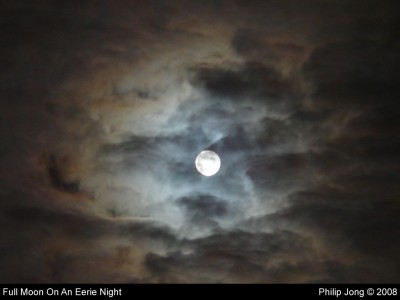
 

For newly obtained crystals, my cleansing ritual is a bit more involved. No matter when I get it, I wait until the night of the Full Moon to start. I dig a hole in the Earth and place the crystal inside then cover it up. The hole doesn't have to be huge--just big enough to fit the crystal.I leave it in the ground until the next Full Moon.     Be sure to take the crystal out the morning or early in the day of the next Full Moon. Place it in a bowl of salt water in the sun. Be sure it's not directly in the sun--in the sun light is good enough. If left in direct sunlight, a bad reflection can start a fire. Leave it in the sun light all day. Also leave it under the light of moon that night. The next day, the crystal is ready to use!! 


How I use my crystalsFor healing, I use crystals in 2 different ways. I rub the crystal over the part of the body that is bothered while visualizing it absorbing any negative energies. I've used to it help clean out muscle aches and pains, headaches, cramps, general body aches, etc. Another way to do it is to visualize healing energies into the crystal. I then give the crystal to the person who needs it (or if it's for myself). I instruct them to place the crystal on the area of their body that is bothering them. Then they are to visualize the crystal absorbing the negative energy.   

For shielding.
This one may take a little practice to do. It took me about a month to finally get a good shield in one. The shield can be used for anything-- negativity, bad work being used against you etc. To work a shield into a crystal, I get myself into a meditative state while holding the crystal in my dominant hand (the hand you write with). I visualize a white light going directly into the crystal. (you can use any color you want) I usually do this for about 15 minutes. Sometimes, one ritual is enough. Sometimes it take a few more tries. Once  I feel as if my shield is strong enough, I then keep it on myself at all time. You can carry it in your pocket or out it in an amulet bag. Or if you want a more permanent type, you can wrap it in wire and wear it as a necklace!! 

Thursday, January 27, 2011

The Alkyonides


The Alkyonides are Greek nymphs of fair weather. They were the daughters of Alkyoneus, King of the Giants, who was killed by Herakles after he had killed a number of the latter’s men. In their grief, they threw themselves into the sea, where they were transformed by Amphitrite, Goddess of the sea, into kingfishers. The Alkyonides became associated with a period of time at the end of December and beginning of January that traditionally has had good weather in Greece, with calm seas and fair sailing. While some ancient authors said that there were as many as eleven Alkyonides, seven have been clearly identified. Their names are Alkippa (also seen as Alcippa; means “strong horse”), Anthe (means “bloom”), Asterie (also seen as Asteria; means “starry”), Drimo (means “piercing”), Methone (means “of Methone,” a town in Thrace), Pallene (means “brandishing”), and Phosthonia (means “light”). The name Alkyonides itself, which is also seen as Alcyonides, means “of Alkyoneus,” and the seven sisters were also known as the Alkyonis or Alcyonis, which means “kingfishers.”

Wednesday, January 26, 2011

Alexirhoe (pronounced ah-leks-IR-oh-ee) is one of the Greek Naiades. The Naiades were generally thought to be daughters of an Okeanid mother (the 3000 daughters of Tethys and Okeanos, Goddesses of fresh water sources) and a Potamoi father (the 3000 sons of Tethys and Okeanos, Gods of the rivers); in Alexirhoe’s case, her father was Grenikos, God of the River Grenikos near Troy. By King Priam of Troy, she was the mother of Aisakos, who would later be turned into a bird when he tried to kill himself after losing his love, the nymph Hesperia. Alexirhoe’s name, which means “averting flow,” is also seen as Alexiroe or Alexirrhoe.

Tuesday, January 25, 2011


Aphrodite, Kallipygos

Aphrodite was the Greek Goddess of beauty, sexuality, lust. The Romans knew her as Venus. Wikipedia notes that her feast day was known as the Aphrodisiac (also referred to as Aphrodisia), which was celebrated all over Greece but particularly in Athens and Corinth. In Corinth, intercourse with her priestesses was considered a method of worshipping Aphrodite. She was sometimes referred to as Aphrodite, Porne, meaning: Aphrodite, the Temple Prostitute, although, as noted above, temple prostitutes were priestesses who helped worshippers to find communion with Aphrodite, so the expression was one of sacredness.

She was also known as Aphrodite, Kallipygos, or Aphrodite of the Beautiful Buttocks. It is in this form that I worship her, as she shows how healthy it can be for women to love their bodies and to enjoy themselves. There are several famous statues of Aphrodite, Kallipygos. Wikipedia tells this story to explain how she came to be worshipped:

"The people of those days were so attached to their sensual pleasures that they even went so far as to dedicate a temple to Aphrodite of the Beautiful Buttocks, for the following reason. One upon a time a farmer had two beautiful daughters. One day these girls, getting into a dispute as to which one had a more beautiful backside, went onto the public street. And by chance a young man was passing by, the son of a rich old man. They showed themselves to him, and when he saw them he voted in favor of the older girl. And in fact, falling in love with her, when he got back to town, he took to his bed and told his younger brother everything that had happened. And the younger brother also went to the country and saw the girls, and he fell in love with the other daughter. And so when the boys' father tried to get them to marry someone of the upper classes, he couldn't persuade his sons, and so he brought the girls in from the country, with their father's permission, and married them to his sons. And so these girls were called fair-buttocked by the citizens, as Cercidas of Megalopolis says in his Iambic Verses: "There was a pair of beautiful-buttocked girls in Syracuse." And so these girls, when they got wealthy and famous, founded a temple of Aphrodite and called the goddess the Fair-buttocked, as Archelaus tells us in his Iambic Verses."

The fact that there was a religious cult of Aphrodite Kallipygos at Syracuse is also mentioned by the Christian author Clement of Alexandria in a list of erotic manifestations of pagan religion. Clement cites the poet Nicander of Colophon, and generously quotes the alternative term (kalligloutos, "with a beautiful bottom") that Nicander used.


Hail Aphrodite, Kallipygos!

Monday, January 24, 2011

History of Imbolc

Imbolc is a holiday with a variety of names, depending on which culture and location you’re looking at. In the Irish Gaelic, it’s called Oimelc, which translates to “ewe’s milk.” It’s a precursor to the end of winter when the ewes are nursing their newly born lambs. Spring and the planting season are right around the corner.
The Romans Celebrate:
To the Romans, this time of year halfway between the Winter Solstice and the Spring Equinox was known as Lupercalia. For them, it was a purification ritual in which a goat was sacrificed and a scourge made of its hide. Thong-clad men ran through the city, whacking people with bits of hide. Those who were struck considered themselves fortunate indeed. This is one of the few Roman celebrations that is not associated with a particular temple or deity. Instead, it focuses on the founding of the city of Rome, by twins Romulus and Remus, who were suckled by a she-wolf -- in a cave known as the "Lupercale".
The Feast of Nut:
The ancient Egyptians celebrated this time of year as the Feast of Nut, whose birthday falls on February 2 (Gregorian calendar). According to the Book of the Dead, Nut was seen as a mother-figure to the sun god Ra, who at sunrise was known as Khepera and took the form of a scarab beetle.
Christian Conversion of a Pagan Celebration:
When Ireland converted to Christianity, it was hard to convince people to get rid of their old gods, so the church allowed them to worship the goddess Brighid as a saint -- thus the creation of St. Brigid's Day. Today, there are many churches around the world which bear her name. 
Purification and Light:
For Christians, February 2nd continues to be celebrated as Candelmas, the feast of purification of the Virgin. By Jewish law, it took forty days after a birth for a woman to be cleansed following the birth of a son. Forty days after Christmas – the birth of Jesus – is February 2nd. Candles were blessed, there was much feasting to be had, and the drab days of February suddenly seemed a little brighter.
Love & Courtship:
February is known as a month when love begins anew, in part to to the widespread celebration of Valentine's Day. In some parts of Europe, there was a belief that February 14th was the day that birds and animals began their annual hunt for a mate. Valentine's Day is named for the Christian priest who defied Emperor Claudius II's edict banning young soldiers from marrying. In secret, Valentine "tied the knot" for many young couples. Eventually, he was captured and executed on Feb. 14, 269 C.E. Before his death, he smuggled a message to a girl he had befriended while imprisoned -- the first Valentine's Day card.
A Celtic Connection:

Serpents in the Spring

Although Imbolc isn't even mentioned in non-Gaelic Celtic traditions, it's still a time rich in folklore and history. According to the Carmina Gadelica, the Celts celebrated an early version of Groundhog Day on Imbolc too – only with a serpent, singing this poem:
Thig an nathair as an toll
(The serpent will come from the hole)
la donn Bride
(on the brown day of Bride (Brighid)
Ged robh tri traighean dh’an
(though there may be three feet of snow)
Air leachd an lair
(On the surface of the ground.)

Among agricultural societies, this time of year was marked by the preparation for the spring lambing, after which the ewes would lactate (hence the term "ewe's milk" as "Oimelc"). At Neolithic sites in Ireland, underground chambers align perfectly with the rising sun on Imbolc.

The Goddess Brighid    

Like many Pagan holidays, Imbolc has a Celtic connection as well, although it wasn’t celebrated in non-Gaelic Celtic societies. The Irish goddess Brighid is the keeper of the sacred flame, the guardian of home and hearth. To honor her, purification and cleaning are a wonderful way to get ready for the coming of Spring. In addition to fire, she is a goddess connected to inspiration and creativity.
Brighid is known as one of the Celtic "triune" goddesses -- meaning that she is one and three simultaneously. The early Celts celebrated a purification festival by honoring Brighid, or Brid, whose name meant "bright one." In some parts of the Scottish Highlands, Brighid was viewed as Cailleach Bheur, a woman with mystical powers who was older than the land itself. Brighid was also a warlike figure, Brigantia, in the Brigantes tribe near Yorkshire, England. The Christian St. Brigid was the daughter of a Pictish slave who was baptised by St. Patrick, and founded a community of nuns at Kildare, Ireland.
In modern Wicca and Paganism, Brighid is viewed as the maiden aspect of the maiden/mother/crone cycle. She walks the earth on the eve of her day, and before going to bed each member of the household should leave a piece of clothing outside for Brighid to bless. Smoor your fire as the last thing you do that night, and rake the ashes smooth. When you get up in the morning, look for a mark on the ashes, a sign that Brighid has passed that way in the night or morning. The clothes are brought inside, and now have powers of healing and protection thanks to Brighid.

Sunday, January 23, 2011

Pendulum Divination

A pendulum is one of the simplest and easiest forms of divination. It's a simple matter of Yes/No questions being asked and answered. Although you can purchase pendulums commercially, ranging from about $15 - $60, it's not hard to make one of your own. Typically, most people use a crystal or stone, but you can use any object that's got a bit of weight to it.

Make Your Own Pendulum

If you decide to make your own pendulum, you'll need a few bacic supplies: 

   Use a pendulum to determine Yes or No answers.
Image © Patti Wigington 2009


  • A crystal or other stone
  • Jeweler's wire
  • A lightweight chain
Take the crystal and wrap it in a length of jeweler's wire. When you're done wrapping it, leave a loop at the top. Attach one end of the chain to the loop. You'll want to make sure the chain isn't too long, because you'll probably be using it over a table or other surface. Generally, a chain between 10 - 14" is perfect. Also, be sure you tuck in any poky pieces of wire so you don't jab yourself later.

Charge Your Pendulum

To charge your pendulum, place it overnight in water or salt. Remember that some crystals will degrade in salt, so be sure to check before you do this. Another option is to leave the pendulum outside overnight in the moonlight.

Calibrate Your Pendulum

To calibrate your pendulum simply means you're checking it to see how it's working. To do this, hold it by the free end of the chain so that the weighted end is loose. Make sure you keep it perfectly still. Ask a simple Yes/No question to which you already know the answer is Yes, such as "Am I female?" or "Do I live in California?"
Keep your eye on the pendulum, and when it starts moving, note whether it goes side to side, forwards to backwards, or some other direction. This indicates your "Yes" direction.
Now, repeat the process, asking a question to which you know the answer is No. This will give you your "No" direction. It's a good idea to do this a few times with different questions, so you can get a feel for how your pendulum responds to you. Some will swing horizontally or vertically, others swing in small or large circles, others don't do a whole lot unless the answer is really important. Once you've calibrated your pendulum and gotten to know it a bit, you can use it for some basic divination.

Friday, January 21, 2011

Oshun's Love Salts

 
ConjuredCardea is sponsoring the first Homespun Hullabaloo giveaways! Look at this beautiful medley called Oshun's Love Salts, keep reading to learn how to enter and win.

About Oshun's Love Salts
"These salts are sensational! They are visually beautiful, smell delicious, and feel wonderful! Indulge your senses and feel alive!

Oshun is the Orisha of love, who is always seen in a yellow dress with a hibiscus flower behind her ear.

These salts promote love, marriage, fertility, laughter, fun, abundance, and protection from false love. Gold, wealth, beauty, creativity, dancing, and love are Oshun's domain and she is happy to grant all of these to you for some attention and honor. She is all about life's pleasures-indulge a little bit; when was the last time you did something for yourself?!

Once you work with oshun, don't forget about her. If you ignore her, she'll assume you are content with your life. Leave her an offering of honey as well, but TASTE IT FIRST! Oshun was poisoned using her favourite food, honey, and she will not trust you if you do not taste it first.

Nothing makes Oshun happier than granting her children mates and lovers but be patient and never take love for granted, it is a special gift and should be appreciated.

Oshun can see things we can not and if the relationship is not right, she won't have you in it. So listen to her-she's your mother!

This luxurious salt is created from the finest Himalayan pink salt, rose petals, damiana (an aphrodisiac;), tiny sea shells, hibiscus flowers, anise seed, rose absolute, and epsom salts. The hibiscus flowers will colour your bath a lovely shade of pink-another way to indulge your senses!"
Conjured Cardea's Shop Announcement
"Conjured Cardea offers authentic, hand made, hand harvested, spiritual supplies for Voodou, Hoodoo, Santeria, Folk Magic, Spiritualist, Wicca, and all forms of The Craft. I live by the principle that we all overlap and inspire one another with our beliefs and practices. Religions have done this for tens of thousands of years. As Pagans we strive to learn and develop as humans and practitioners and, as Pagans, we believe that developing spiritually means following our hearts- not a doctrine, not a guru. Whether that means we choose a conglomerate of practices or choose to become an initiate of one specific path, we are all equal. You will not be judged for dabbling in something new and exciting here! We are here to support each other on our chosen paths and celebrate the diversity that teaches us and inspires us to grow.

Here, you will experience a full-service botanica full of hand crafted, hand harvested items-the way spiritual items should be! Why buy mass produced, over priced items from catalogues? Demand the best for your practice! Take a look around, my listings offer tons of tips, tricks, tidbits, and spells!

My supplies are created from the highest quality, organic, ethically harvested ingredients, following authentic, tried and true family recipes. I offer custom spell kits, paquets, oils, and prayer luminaries. I love custom work, so just convo me if you need something special! Want some details? Check out my profile, feedback, and policies."

More on Oshun
"Oshun, or Ochun in the Yoruba religion, is an Undergoddess who reigns over love, intimacy, beauty, wealth and diplomacy. She is worshipped also in Brazilian Candomblé Ketu, with the name spelled Oxum.

Ọṣhun is beneficent, generous and very kind. She does, however, have a horrific temper, one which she seldom ever loses but which causes untold destruction whenever she does. Oshun is said to have gone to a drum festival one day and to have fallen in love with the king-dancer Shango, Undergod of lightning & thunder. Since that day, Shango has been married to Oba, Oya, and Oshun, though Oshun is said to be considered his principal wife." Wiki


To enter to win, go here domesticwitch.blogspot.com/2011/01/oshuns-love-salts.html